What Is SBTi, and Why Every Dairy Cooperative Is Racing to Get Validated
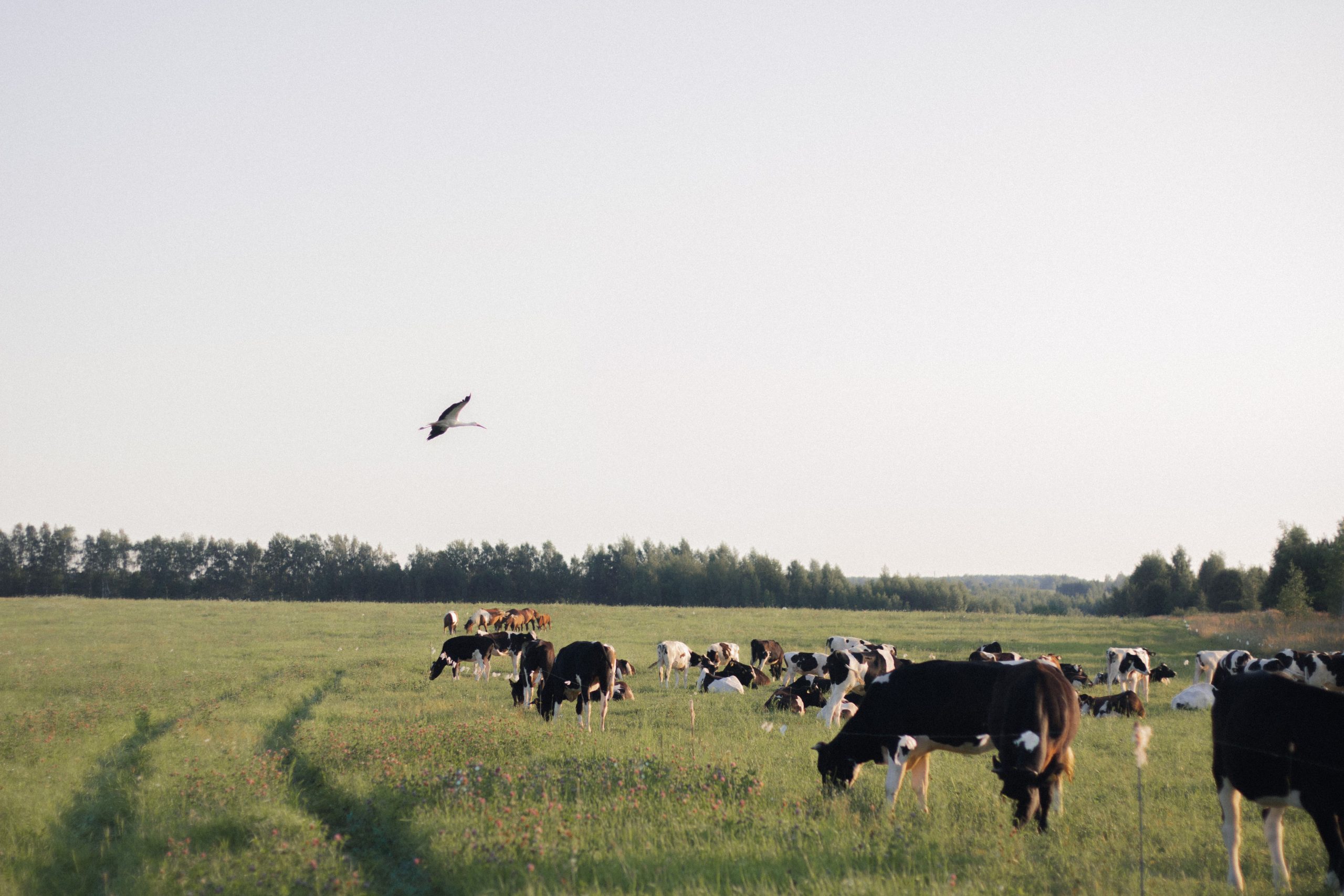
The Science Based Targets initiative has become the closest thing the food and agriculture sector has to a universal reference point for climate targets, and for dairy specifically, it now comes with sector-specific requirements that catch a lot of companies off guard. Here’s what it actually is, what it requires, and why so many cooperatives are moving to get validated now rather than later.
What SBTi actually is
The Science Based Targets initiative (SBTi) is an independent body that validates corporate greenhouse gas reduction targets against what climate science says is actually required to limit global warming, rather than letting companies set whatever target sounds ambitious. A validated SBTi target isn’t a marketing claim; it’s been checked against a defined methodology and approved by a third party with no commercial stake in your company looking good.
This is precisely why it answers the exact question so many sustainability leads are asking internally right now: is our number actually defensible, or just a number we picked? SBTi validation is, functionally, the industry’s answer to that question.
Why dairy specifically needs to know about FLAG
Here’s the part that trips up a lot of companies new to this: standard SBTi targets cover what’s often called “Energy & Industry” emissions: fossil fuel use, transport, manufacturing, purchased goods and services. But dairy, along with beef, coffee, palm oil, and several other land-intensive commodities, falls under a separate, additional standard: FLAG, Forest, Land and Agriculture.
FLAG exists because land-based emissions behave fundamentally differently from fossil-fuel emissions. They involve both emissions and removals (a well-managed pasture can sequester carbon, a fossil fuel plant cannot), carry much greater measurement uncertainty, and can’t be reduced using the same levers as an energy-intensive industrial process. The SBTi built FLAG specifically to address this, in partnership with WWF, and it draws on the GHG Protocol’s Land Sector and Removals Standard as its underlying accounting methodology.
FLAG-related emissions are not a rounding error at the global level. They represent roughly 22% of net global greenhouse gas emissions, around 13 gigatonnes of CO2-equivalent per year, and land-sector action is estimated to represent close to 37% of the mitigation potential needed by 2030. This is the scale of the problem FLAG was built to address.
Do you actually need to set a FLAG target?
If your organisation falls into either of these categories, the answer is very likely yes:
- You’re in one of the FLAG-designated sectors (which includes dairy, beef, and several other land-intensive commodities), or
- Your FLAG-related emissions (including land-use-change emissions) account for 20% or more of your total scope 1–3 emissions, regardless of sector.
There’s a floor on the other side too: if land- and agriculture-related emissions make up less than 5% of your total emissions, you’re not required to set a FLAG target even if you’d otherwise be in scope. And smaller companies meeting SBTi’s SME definition have a separate, lighter-touch pathway.
Since FLAG target-setting became mandatory for qualifying companies submitting new or updated targets in April 2023, this isn’t an optional extra layer anymore for most of the dairy sector. It’s simply part of what a credible SBTi commitment now requires.
Two ways to actually set a FLAG target
SBTi offers two distinct approaches, and picking the right one depends on where your organisation sits in the supply chain:
The FLAG Sector Pathway is built for demand-side companies: food retailers, large processors, and manufacturers sourcing from a diversified portfolio of commodities. It’s an absolute-reduction approach, requiring a science-based rate of mitigation of 3.03% per year, aligned with limiting warming to 1.5°C.
Commodity Pathways are generally the better fit for companies whose emissions are concentrated in one or two specific inputs. There are 11 defined pathways, including one specifically for dairy, alongside beef, palm oil, soy, rice, and others. These are intensity-based targets, tied to each commodity’s own mitigation potential rather than a flat percentage.
A hybrid approach is also possible: applying the sector pathway broadly while using a commodity-specific pathway for your highest-impact input. For most dairy cooperatives and processors with concentrated exposure to milk as a primary commodity, the dairy commodity pathway is usually the more directly applicable starting point, though the right choice genuinely depends on your specific portfolio and should be worked through carefully rather than assumed.
What changed in 2026, and why it matters right now
SBTi published FLAG Guidance Version 1.2 on March 19, 2026, the first substantive revision since FLAG targets became mandatory in 2023. If your organisation set a FLAG target before this date, or is setting one for the first time now, a few changes are directly relevant:
- Seven commodities are now subject to mandatory no-deforestation commitments: cattle, cocoa, coffee, oil palm, rubber, soy, and timber. Cattle’s inclusion here is directly relevant to dairy operations with a land-use footprint tied to grazing or feed production.
- The previous 2025 no-deforestation deadline has been removed. Companies setting a FLAG target for the first time now have up to two years after submitting for SBTi validation to achieve no-deforestation status, with a hard outer deadline of 2030.
- Companies with a validated SBTi target but no FLAG target must now set one by their mandatory five-year target review. This isn’t something that can be indefinitely deferred if you already have a standard SBTi commitment.
- No-deforestation documentation must be published within 12 months of target validation.
One more accounting detail worth knowing now, even though it doesn’t bite immediately: the GHG Protocol Land Sector and Removals Standard, which underpins FLAG’s methodology, becomes formally enforced from January 1, 2027. If your organisation is setting or revising a target this year, building toward that standard now avoids a scramble later.
The coverage requirements, in plain terms
To have a FLAG target validated, SBTi requires it to cover:
- At least 95% of your FLAG-related scope 1 emissions
- At least 67% of your FLAG-related scope 3 emissions
And one detail that surprises people the first time they encounter it: you cannot simply subtract land-based carbon removals (like sequestration from improved grazing management) from your reported emissions to make your number look lower. Reductions and removals must be tracked and reported separately. The accounting doesn’t allow netting one against the other to arrive at a flattering headline figure.
What this means practically, if you’re just getting started
- Figure out early which pathway fits you, Sector Pathway or Commodity Pathway, since this shapes your entire target-setting process downstream, and the two produce meaningfully different targets.
- Get your FLAG-related emissions inventory in order before you approach validation, since incomplete or unreliable land-sector data is one of the most common reasons target-setting stalls.
- Don’t treat carbon and land-use accounting as one combined number. FLAG deliberately separates them because they behave differently. Mixing them up early creates rework later.
- If you already have a validated non-FLAG SBTi target, don’t assume you’re finished. Your five-year review will require a FLAG target if you’re in scope and haven’t set one yet.
- Build toward the Land Sector and Removals Standard now, even though it isn’t formally enforced until 2027. Waiting until the deadline compresses a genuinely complex methodology transition into far too little time.
SBTi validation, and FLAG specifically, isn’t a box-ticking exercise. It’s becoming the shared language the entire dairy supply chain uses to talk about whether a climate commitment is real. Understanding it properly now, rather than reactively when a customer or regulator asks, is the difference between being ahead of this shift and scrambling to catch up with it.
Sources: Science Based Targets initiative, FLAG Science-Based Target-Setting Guidance v1.2 (March 2026); sciencebasedtargets.org, Forest, Land and Agriculture (FLAG) sector page.