What Does Biodiversity Actually Mean for a Dairy Farm?
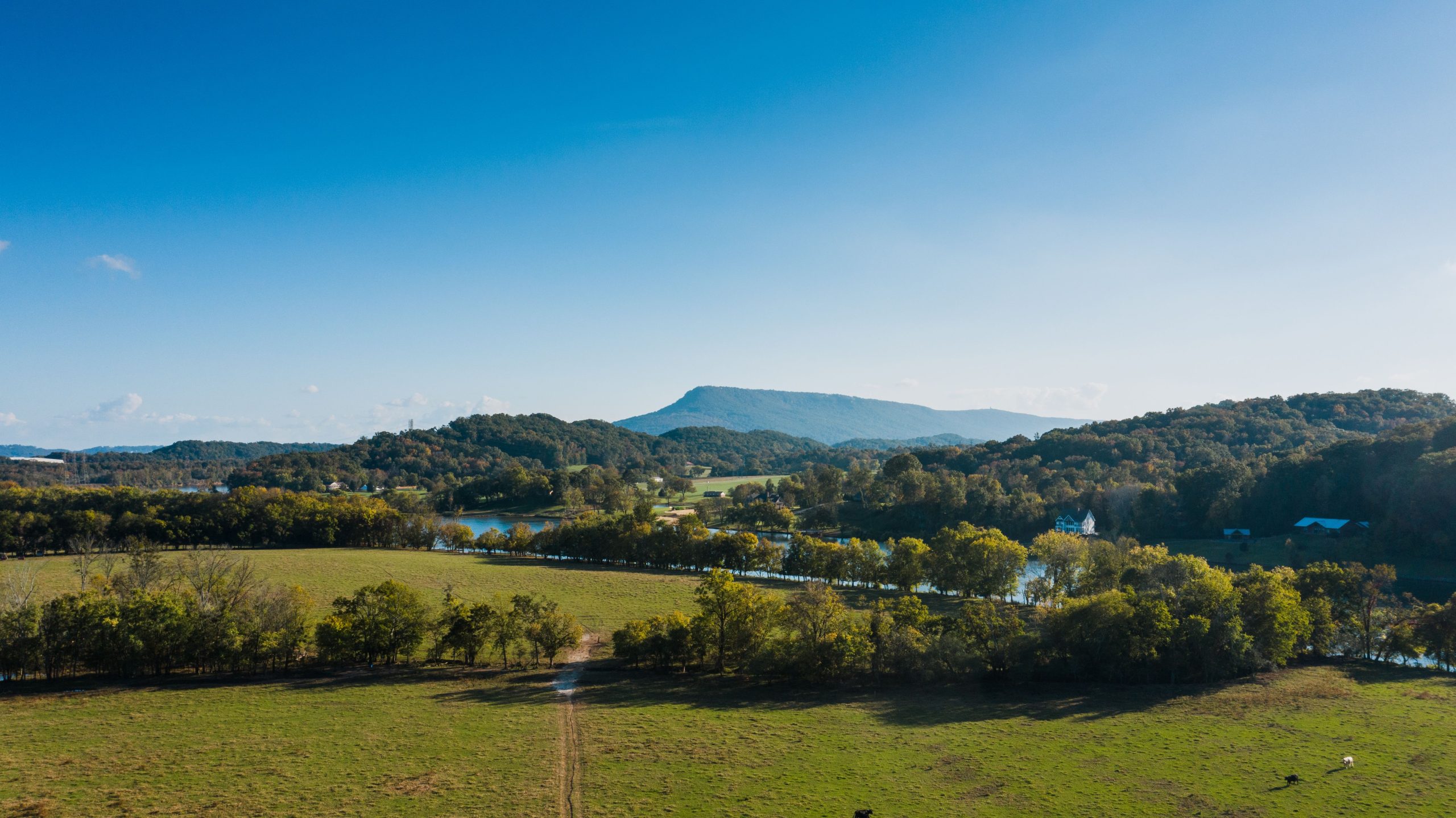
Ask five sustainability leads in dairy what “biodiversity” means for their business, and you’ll likely get five different answers, or an honest admission that they’re still figuring it out. That’s not a knowledge gap unique to any one company. It’s genuinely one of the least standardised parts of sustainability reporting in the sector right now, and if you’ve felt behind on it, you’re in good company.
Carbon has a fairly settled vocabulary: kilograms of CO2 equivalent, scope 1/2/3, a marginal abatement cost curve. Biodiversity doesn’t have that same shared language yet, which is exactly why it’s worth breaking down plainly, without assuming you already know the jargon.
Biodiversity, in plain terms
At its simplest, biodiversity on a farm means the variety and health of living things on that land, beyond the cows themselves. That includes:
- Habitat features: hedgerows, field margins, ponds, woodland edges, wetland areas
- Species diversity: birds, pollinators, soil organisms, plant variety in pastures
- Habitat quality: not just whether a hedgerow exists, but how dense, wide, and well-connected it is to other habitat
The reason this matters commercially isn’t sentimental. Milk buyers, food companies, and increasingly regulators want evidence that farm-level land use isn’t degrading over time, and “biodiversity” is the umbrella term for that evidence.
Why processors are asking for it now
Three forces are converging at once:
- Corporate Sustainability Reporting Directive (CSRD) and ESRS in the EU explicitly require disclosure on biodiversity and ecosystems, not just carbon, for companies in scope.
- The EU’s own target of protecting and restoring biodiversity on at least 10% of agricultural land (a figure written into the EU Biodiversity Strategy) is becoming a reference point processors compare their own farms against.
- Carbon reporting has matured faster than biodiversity reporting, so many food companies that already have a handle on their carbon footprint are now under pressure to show the same rigor on nature.
That third point is worth sitting with. If your organisation has already built solid carbon-reporting muscle, biodiversity is likely to be treated as “the next carbon”, expected to follow the same trajectory from voluntary, to requested, to required.
How biodiversity is actually measured on a working farm
This is where it gets genuinely useful rather than conceptual. In practice, biodiversity assessment for a livestock farm tends to combine two approaches:
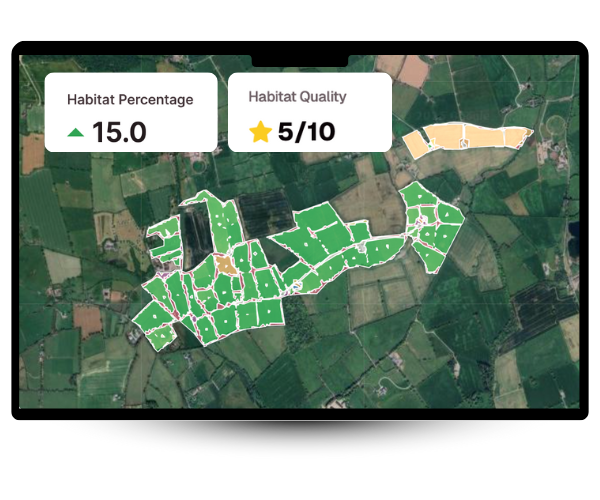
Remote sensing and satellite imagery: used to map habitat types across a farm (semi-natural grassland, hedgerows, woodland, wetland) and track change over time without needing someone to physically walk every field. This is increasingly the backbone of scalable, portfolio-wide biodiversity monitoring, because it’s the only realistic way to assess thousands of farms consistently.
Farm-level habitat indicators: things like hedgerow length and condition, the percentage of a farm under semi-natural habitat, and species presence surveys. These add ground-truth detail that satellite data alone can’t capture, particularly habitat quality rather than just habitat presence.
Neither approach alone is sufficient. Satellite data scales but can miss nuance; ground surveys capture nuance but don’t scale to a whole supply chain. The credible middle ground combines both, and this is exactly why some of the most advanced biodiversity monitoring programmes in the dairy sector (FrieslandCampina’s Biodiversity Monitor, developed with WWF Netherlands and Rabobank, is a well-known example) pair remote sensing with farmer-reported and surveyed data.
The part almost nobody has figured out yet
Here’s the honest gap: even organisations with a mature carbon strategy are often genuinely unsure what to do after they’ve measured their biodiversity baseline. Mapping habitat is one thing. Knowing whether to prioritise hedgerow restoration versus wetland creation versus reduced fertiliser use near watercourses, and being able to show that choice was evidence-based, is a different, harder problem.
If you’re in that position, you’re not behind an industry standard. There largely isn’t one yet. What separates a strong biodiversity programme from a stalled one at this stage isn’t having every answer. It’s having a clear, defensible starting point and a plan to build from it, rather than waiting for certainty that may not arrive for a few more years.
Where to actually start
If your organisation is early in this:
- Get a baseline habitat map first, even a rough one, before committing to specific interventions. You can’t prioritise what you haven’t measured.
- Pick 2–3 indicators, not twenty. Semi-natural habitat percentage and hedgerow condition are a reasonable, defensible starting pair for most livestock operations.
- Decide how biodiversity connects to your carbon work, rather than running them as two unrelated programmes. Land-use decisions (e.g. converting marginal land to habitat) often affect both at once.
- Expect to revise your approach. Biodiversity methodology is still evolving faster than carbon methodology did at the same stage. Building in flexibility now avoids a costly redo later.
Biodiversity doesn’t need to be intimidating to take seriously. It needs a working definition, a measurement approach that combines scale with ground truth, and an honest acknowledgment that the whole sector, not just your organisation, is still building the playbook together.