Slurry Storage Covers: How to Choose One, and What It Actually Delivers
Slurry storage covers are a low-cost, underused mitigation strategy with solid evidence behind them. The size of the benefit depends heavily on a choice most farms never think carefully about: what kind of cover, and whether it’s paired with methane capture.
What a cover actually does
An uncovered slurry store loses nitrogen to the atmosphere continuously as ammonia, particularly when temperature and wind speed are high. That lost ammonia isn’t just an air quality issue. It’s nitrogen that would otherwise be available to crops after land application, and it’s also a source of indirect nitrous oxide once it redeposits elsewhere.
A cover works by limiting airflow across the slurry surface, restricting the diffusion that drives ammonia loss.
How to choose the right type of cover
There are two broad categories, and the right choice depends on your storage type and what you’re trying to achieve:
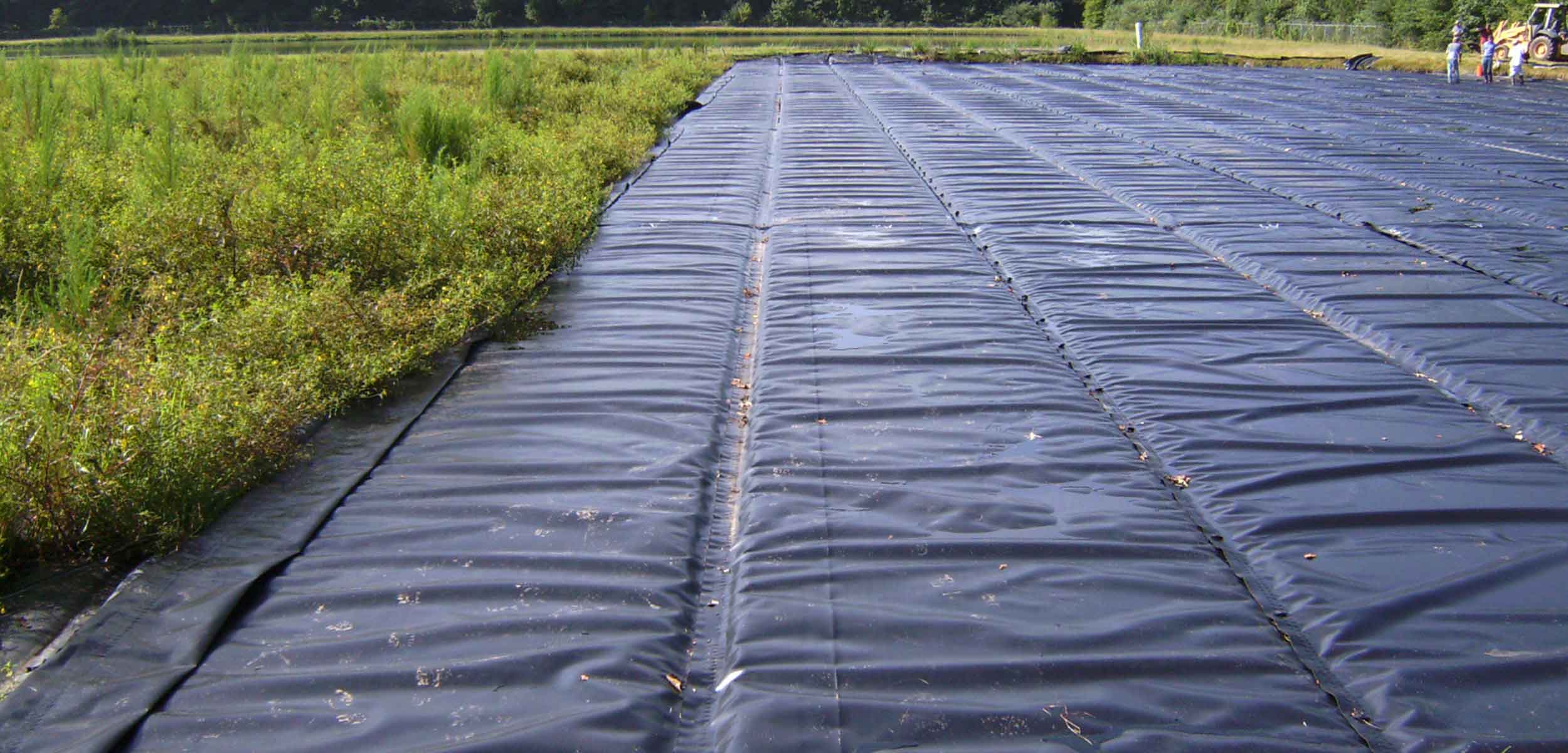
Impermeable covers, whether rigid lids or floating plastic sheets that rise and fall with the slurry level, create a physical barrier and are generally best suited to tanks. Research reviews put the typical ammonia reduction from impermeable covers at around 80% on above-ground tanks, with individual studies reporting a range as wide as 66 to 88% depending on slurry type and cover design. A semi-floating impermeable cover design, anchored at the tank’s rim and floating on the slurry surface from around a metre of fill level onward, is one common practical configuration for retrofitting an existing tank.
Permeable floating materials, such as straw, chopped plant material, or specialist floating layers, are typically better suited to lagoons and achieve somewhat lower but still meaningful reductions, typically in the 50 to 60% range, with some materials achieving considerably more under the right conditions.
Fitted lids and rigid structural covers offer the highest and most consistent reduction, but come with a higher capital cost and are generally only practical for smaller, purpose-built stores rather than large existing lagoons.
The part that changes the calculation entirely: methane
Here’s the detail that gets missed most often. A cover does not stop methane from being produced in the slurry. Anaerobic decomposition continues underneath it regardless of whether the surface is sealed. What a cover changes is whether that methane escapes freely or accumulates.
If the cover is airtight and designed for gas capture, the methane can be drawn off with a pump and either flared, converting it to less potent carbon dioxide, or processed into biomethane for energy use. This is where slurry covers connect directly to anaerobic digestion as a mitigation strategy, since a well-designed capture system is effectively a simple form of digestion infrastructure.
If the cover is not designed for capture, and most farm-level covers installed purely for ammonia control are not, the methane simply accumulates underneath and is released in a pulse when the cover is disturbed or the slurry is agitated for spreading. In that scenario, a cover installed purely for ammonia reasons may do very little for methane, and in some circumstances could concentrate a release rather than prevent one.
This is not a reason to avoid covering slurry. It is a reason to be precise about which problem you are solving. A cover chosen and installed correctly for ammonia control is a strong, well-evidenced intervention for nitrogen loss. Claiming a methane benefit from the same installation requires a different specification, and a different conversation with whoever supplies it.
The added benefits that make the economics work
Beyond emissions, impermeable covers keep rainwater out of the store entirely. In regions with high rainfall, this can meaningfully reduce the storage capacity a farm needs to build in the first place, since the store isn’t filling up with rainwater alongside the slurry itself. For a farm planning new storage infrastructure, factoring this into the capacity calculation can offset a meaningful share of the cover’s installed cost.
Financial support available
In Ireland, TAMS III includes a dedicated grant category for qualifying slurry and manure storage investments, offering 60% grant aid on eligible expenditure up to an investment ceiling of €90,000. Given how much of a typical farm’s TAMS budget can already be committed to related schemes like Low Emission Slurry Spreading equipment, it’s worth planning a cover investment alongside other nutrient-management upgrades rather than treating it as a separate, later decision, since TAMS applications are ranked and selected within each tranche rather than approved automatically.
What to actually do with this information
- Decide what you’re optimising for before choosing a cover type. If ammonia and nitrogen retention is the goal, an impermeable or well-specified permeable floating cover delivers strong, well-documented results. If methane capture is also a goal, you need an airtight system connected to a flare or capture unit, not just any cover.
- Match cover type to store type. Impermeable floating or semi-floating covers generally suit tanks; permeable floating materials are more common on lagoons; rigid lids suit smaller, purpose-built stores.
- Don’t assume a basic cover delivers a methane co-benefit. If your sustainability reporting currently claims a methane reduction from slurry covers without a capture system in place, it’s worth revisiting that claim before an auditor does.
- Factor rainwater exclusion into your storage capacity planning, particularly for new-build stores in higher rainfall regions. This is a genuine cost offset, not just an environmental co-benefit.
- Check grant eligibility before committing capital. Schemes like TAMS III can cover a significant share of the cost, but usually require planning ahead of a specific application window rather than an immediate purchase.
- Treat covers and anaerobic digestion as a connected decision, not two separate strategies. A cover designed for capture is a meaningful step toward digestion infrastructure, not a competing alternative to it.
How this fits inside a mitigation toolbox
A serious mitigation model treats a basic pond or tank cover and anaerobic digestion as related but separate strategies, rather than one blended option. A basic cover changes a farm’s manure management classification toward a lower-emission category for storage. Anaerobic digestion goes further, actively capturing methane as biogas rather than simply limiting its release. Keeping these distinct in a model, rather than assuming every cover behaves the same way, is what allows a farm to claim only the reduction its actual equipment supports.
Slurry storage covers won’t be the main story in anyone’s sustainability report. But they are a low-cost, well-evidenced way to retain nitrogen and reduce ammonia loss, with a methane benefit available if the specification is right, and grant support to help fund it. They deserve more attention than they typically get.
Sources: AHDB, “Using impermeable slurry covers to reduce emissions”; ScienceDirect, “Ammonia and greenhouse gas emissions from slurry storage: a review” (2020); Journal of Environmental Quality, novel approach to estimating ammonia abatement from semifloating slurry covers (2021); Farmers Weekly, advice on investing in slurry lagoon or tank covers; IFAC, “TAMS III deadlines are approaching: should you apply?”