Efficiency First: How Alltech Approaches Livestock Sustainability in Iberia
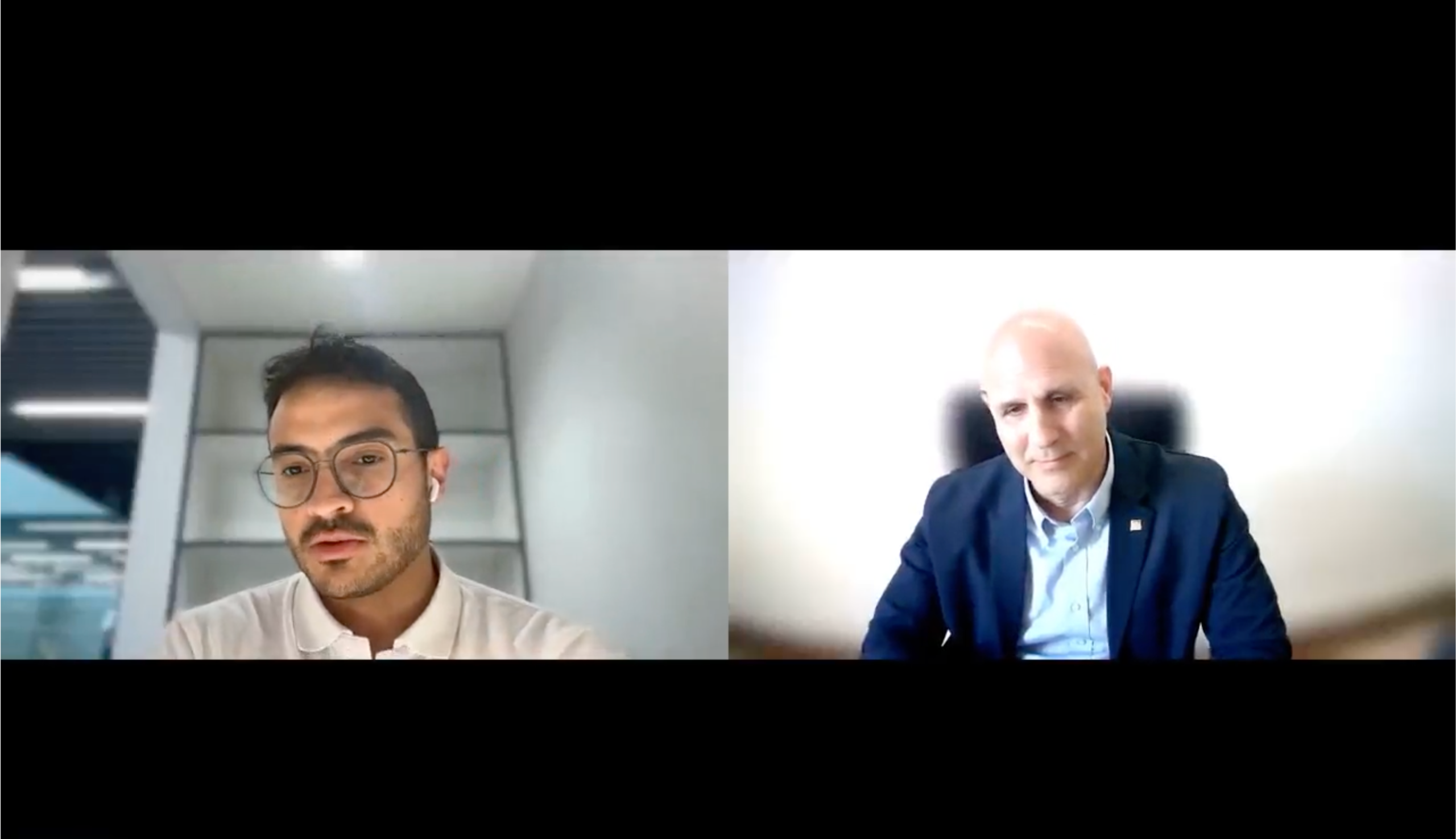
Jomi Bernad explains how efficiency, profitability, and emissions reduction go hand in hand on livestock farms.
In this interview, Jomi Bernad (Regional Manager at Alltech Iberia) shares how one of the world’s largest animal health and nutrition companies approaches livestock sustainability across diverse markets. In conversation with Alejandro Vergara (CEO of ODOS Tech), he explains why mitigation strategies only work when they also improve farmer profitability, how Alltech adapts its portfolio to different farming systems, and why slurry treatment is the next frontier for emissions reduction.
Founded over 45 years ago, Alltech operates in more than 170 countries with a portfolio of mitigation technologies including Agolin®, Yea-Sacc®, Optigen®, and Eminex®.
How Does Alltech Work Across the Value Chain?
Sustainability pressure rarely starts at the farm. It usually begins with the consumer, moves through retail, and lands on the farmer at the end of the chain. That disconnect creates confusion, and Jomi believes integrating the message across the value chain is one of Alltech’s central jobs.
He describes a clear shift in priorities. “Not long ago, a year or two, the focus was very much on measurement. Right now, the message is: we’ve measured it, let’s mitigate.”
Because around 80 percent of a livestock product’s life-cycle emissions come from the farm, the heavy lifting has to happen at farm level for the rest of the chain to benefit. Alltech works with farmers while keeping cooperatives, processors, and retailers informed, so the value generated at the farm gate moves up the chain to the retailer and ultimately the consumer.
The cycle is now closing: measure, mitigate, measure again to verify improvement.
How Does Alltech Adapt Its Strategy to Different Farming Systems?
A grazing system in Ireland looks nothing like a semi-pasture operation in northern Spain, which in turn looks nothing like an intensive farm in the south. The drivers of emissions, and therefore the right interventions, change accordingly.
Alltech’s philosophy is “Think Global, Act Local.” The methodology stays consistent, but the application is always tailored. As Jomi describes it: define the scenario, measure the impact, identify the variables, farm KPIs, geography, management practices, and only then apply mitigation techniques.
“In some cases, enteric fermentation will be much more significant in places where forage is a very important part of the diet, but there will be other areas, such as southern Spain, where feed, fodder and cereals will have an even greater specific weight than ruminal fermentation,” he says.
The takeaway: there is no one-size-fits-all solution. A comprehensive strategy starts with measuring and analysing the initial situation, then layering the right interventions on top.
How Do You Talk to Farmers About Yeasts, Essential Oils, and New Technologies?
Concepts like yeasts, essential oils, and controlled-release urea are technical. For a farmer focused on running a business, the language can feel disconnected from daily reality. Jomi sees this as one of the biggest sources of confusion in the market today.
Alltech’s response is to lead with the outcome, not the technology. “When you can provide a solution that integrates, call it yeast, call it essential oils or controlled-release urea, whatever technology you include really has to form part of a programme that the farmer can easily understand: where they’re starting from and where this programme will take them.”
The non-negotiable starting point is profitability. “The only way to connect with the farmer is to talk about their bottom line. That’s the truth of the matter.”
Sustainability comes through the same door. When the financial case is clear, the environmental gains follow.
What Is the Next Frontier for Emissions Reduction?
Methane and enteric fermentation have dominated the conversation, partly because of public scrutiny and partly because the science matured first. Feed and nutrition have followed as the second major lever. According to Jomi, the next priority is slurry.
“Emissions from slurry are the third most significant factor, and steps are being taken, though I believe there is much room for improvement,” he says. Alltech is researching products that can reduce methane and nitrous oxide emissions from slurry by around 80 to 85 percent, while improving its fertilising power and indirectly reducing the need for synthetic fertilisers in the field.
The complexity is part of the appeal. Slurry treatment links livestock and arable, animal nutrition and soil management, closing the loop across the farming system. “That is where we will see a giant leap forward in the coming years.”
How Mature Is the Iberian Sustainability Market?
The Iberian Peninsula sits in an interesting middle ground. Compared to the rest of Europe, Jomi believes the region is moving in the right direction but in smaller steps. Compared to other parts of the world, including the United States, it is ahead, particularly in the regulatory framework that shapes how sustainability is implemented.
In markets like the US, the pressure is starting to come from consumers and retailers rather than legislation. That kind of demand-led pressure can move faster than regulation when it takes hold.
Within Iberia, Alltech has been working on this agenda for more than seven years and now sees clear momentum: cooperatives with dedicated sustainability departments, 2030 targets across the sector, and budgets being allocated.
Macroeconomic pressure complicates the picture. Tripled fertiliser prices and rising input costs push farmers and industry toward what is urgent, survival and profitability, rather than what is important. But Jomi argues this should sharpen the focus rather than weaken it. “When prices are not where they should be, when volatility is high, that is when the farmer and the industry have to be more efficient than ever.”
Efficiency is directly linked to profitability, and profitability is directly linked to sustainability. The current instability, Jomi suggests, is also an opportunity to do things better, and to prove the case that mitigation pays.