The SDAS Gave You The Data. Now You Need Tools To Act On It.
ODOS turns your Bord Bia Sustainable Dairy Assurance Scheme (SDAS) carbon data into a credible net zero pathway, with the tools to choose the right interventions for your supply chain and prove the impact of every action taken.
One platform for everything.
Here's How It Works In 3 Steps
All we need is the SDAS report you already have.
Your SDAS Report
One document is all it takes. The company-level SDAS report your co-op already holds contains the farm distribution, production volumes, and input data ODOS needs to get started. Nothing more is required.
Supply Base Replication
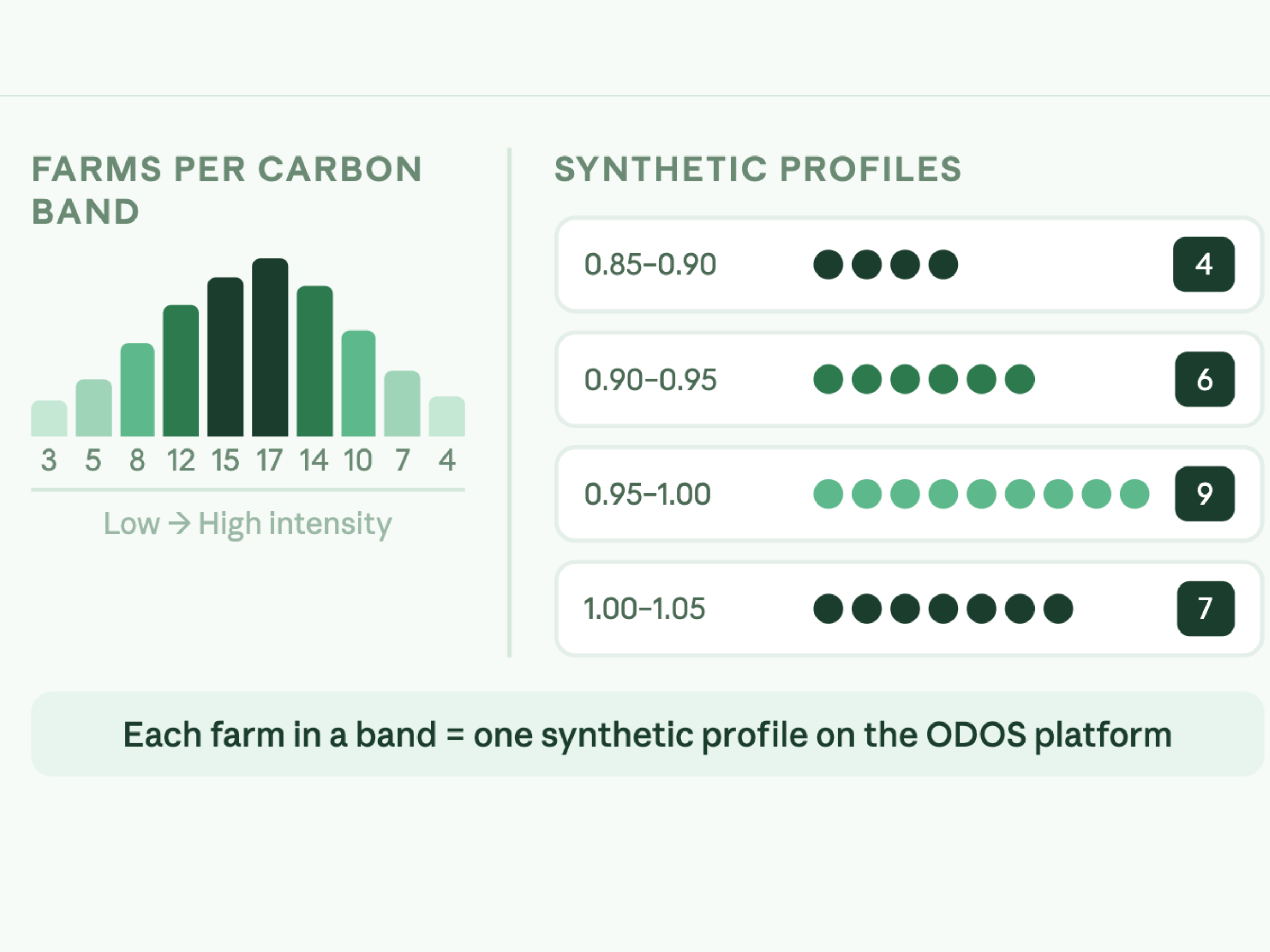
Every percentile band in the SDAS report becomes a set of synthetic farm profiles in the ODOS platform, replicating emissions intensity, input usage, and production volume for each band, across your entire supply base.
Net Zero Pathway
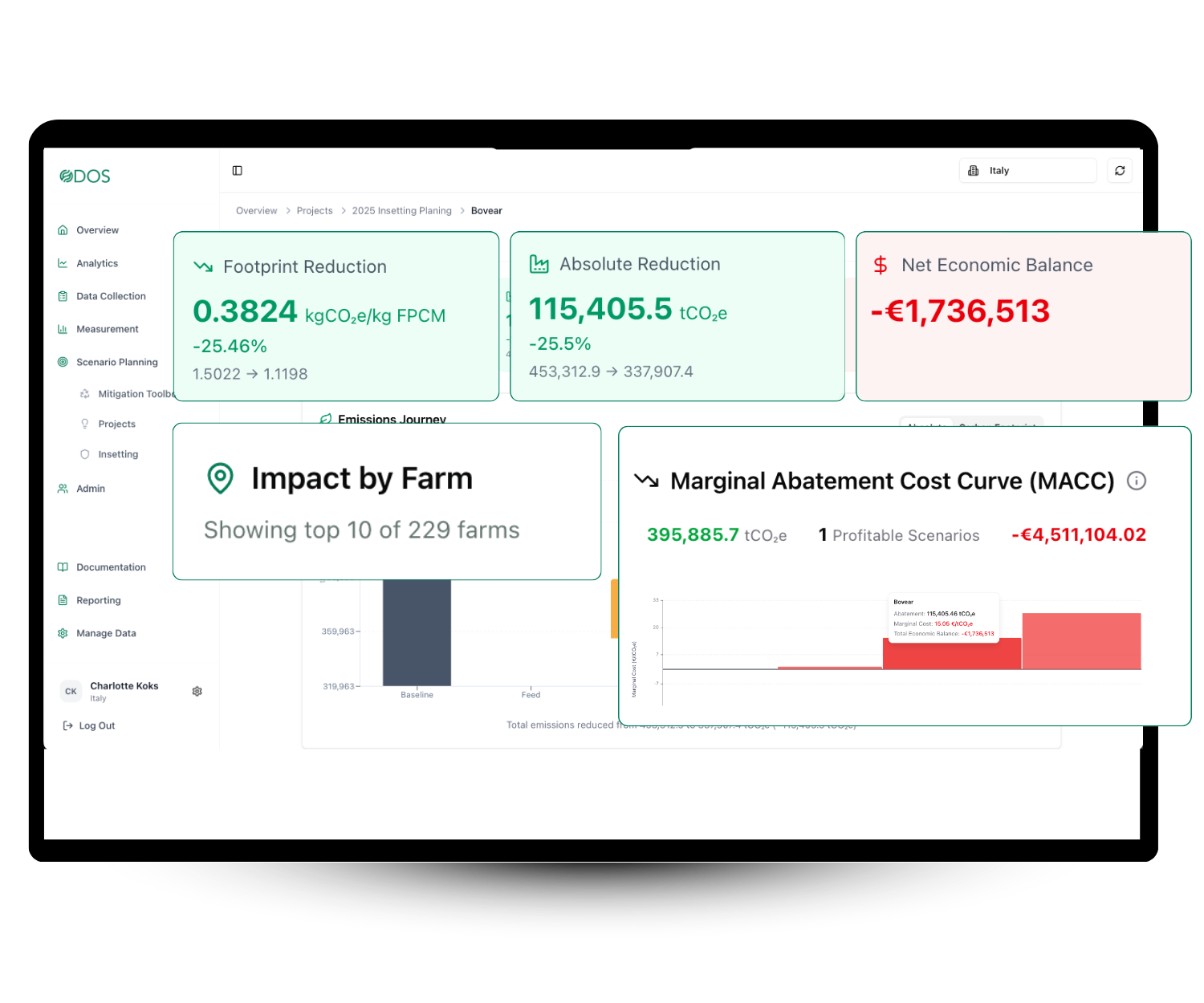
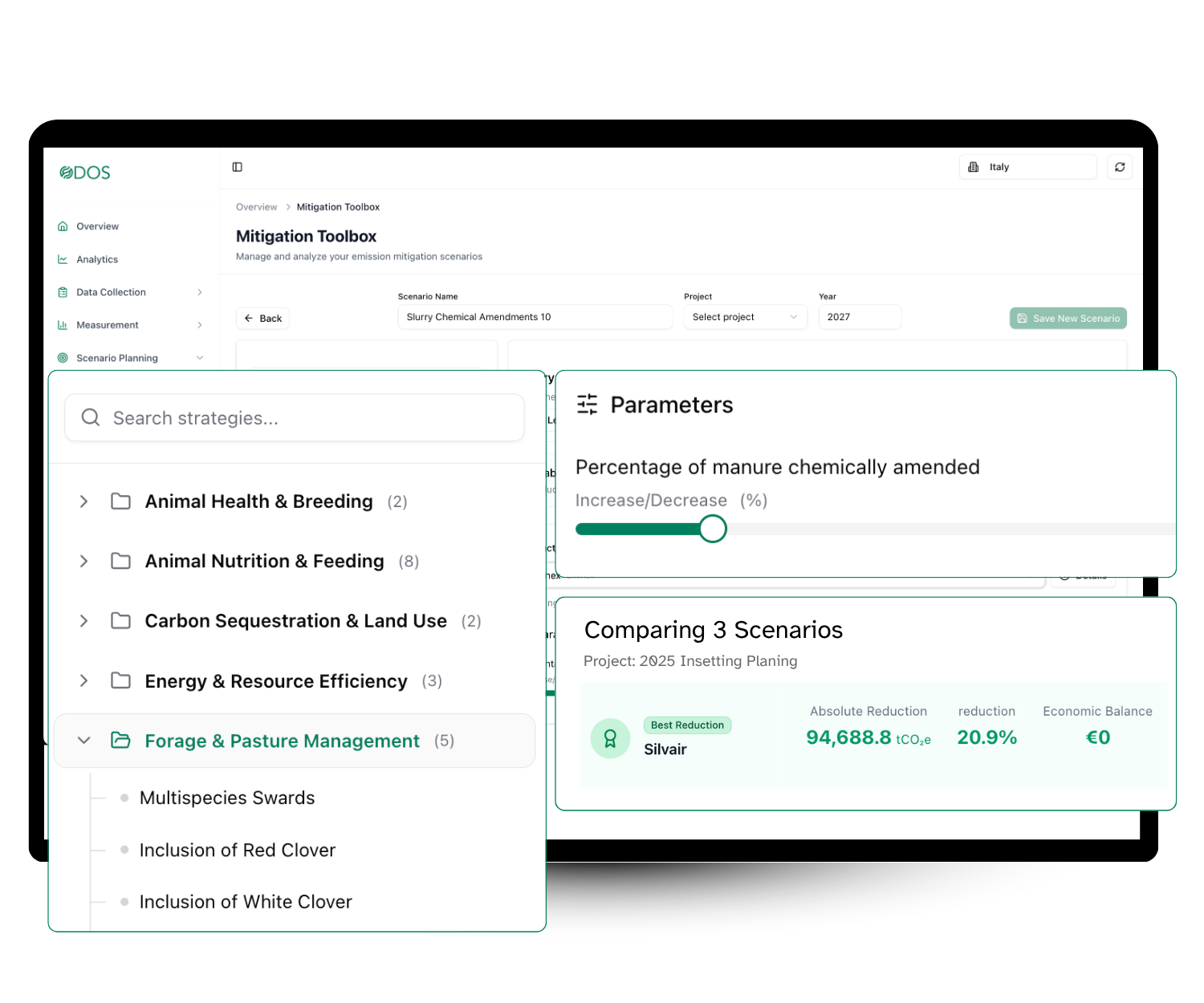
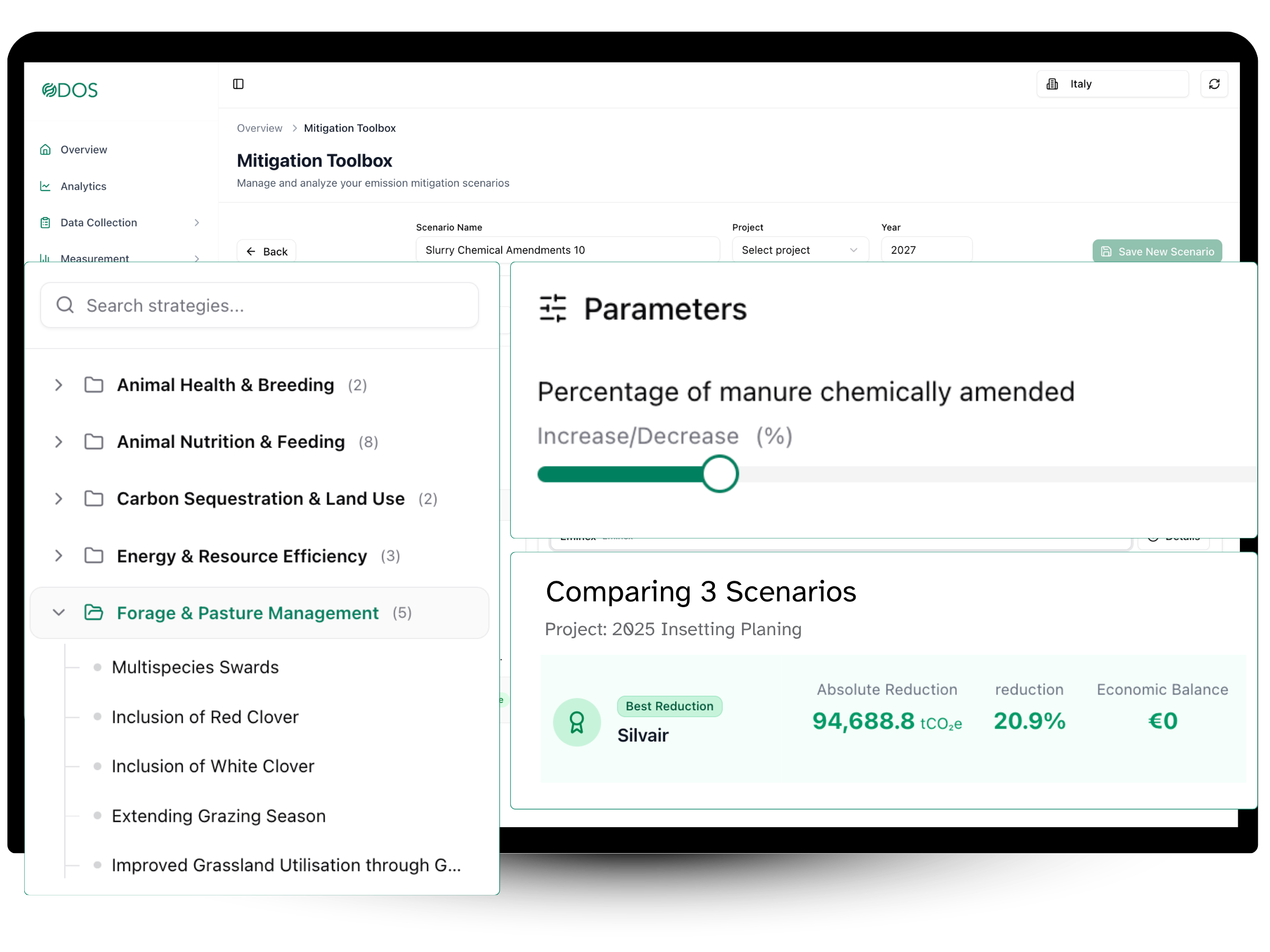
ODOS models 30+ mitigation strategies across every farm profile and builds a supply-chain marginal abatement cost curve, showing which interventions move your footprint most, at what cost, in which order to back them.
“Alejandro and Cian from ODOS were key to the Farm Zero C project and our product LCAs. They delivered professional and prompt results for our cheese, dairy ingredients, and alcohol products. We recommend them for their expertise in our sustainability projects.”
What's Missing After The Report
The data is there. The tools to act on it aren't there yet.
There's no credible plan behind your net zero target
A net zero target means nothing until you can prove, using your own supply chain's data, exactly which farms will drive the reduction and which interventions will get you there.
The SDAS report shows you where you are, not what to do next.
It points to a handful of interventions, but makes no distinction between what works best for which farm or which actions are worth backing first.
Farmers actions don't show up in your carbon footprint
Most on-farm actions aren't recognised in standard SDAS reporting, so the reductions your farmers are delivering don't appear anywhere that counts.
Turning Data Into Action
One platform. Three problems solved. Here's how it works.
Build A Credible Net Zero Road Map
ODOS takes your SDAS data and builds what comes next: a documented, supply-chain pathway that maps which interventions drive the most reduction, what the trajectory looks like year by year, and how your Scope 3 FLAG emissions get to where they need to be.
-
Scope 3 FLAG pathway planning
-
Supply-chain reduction trajectory
-
Board and auditor-ready delivery documentation
Model And Compare 30+ Interventions
From protected urea and low-emissions slurry spreading to methane inhibitors, clover incorporation, and precision feeding. Every strategy is modelled against your actual supply base data, so you can see which combination moves the number most, at what cost, and at realistic adoption rates.
-
Farm-level Marginal Abatement Cost curve
-
Ranked by impact, cost and adoption potential
-
Covers feed, manure, fertiliser, grazing, herd management and more
Prove The Actions In Your Supply Chain
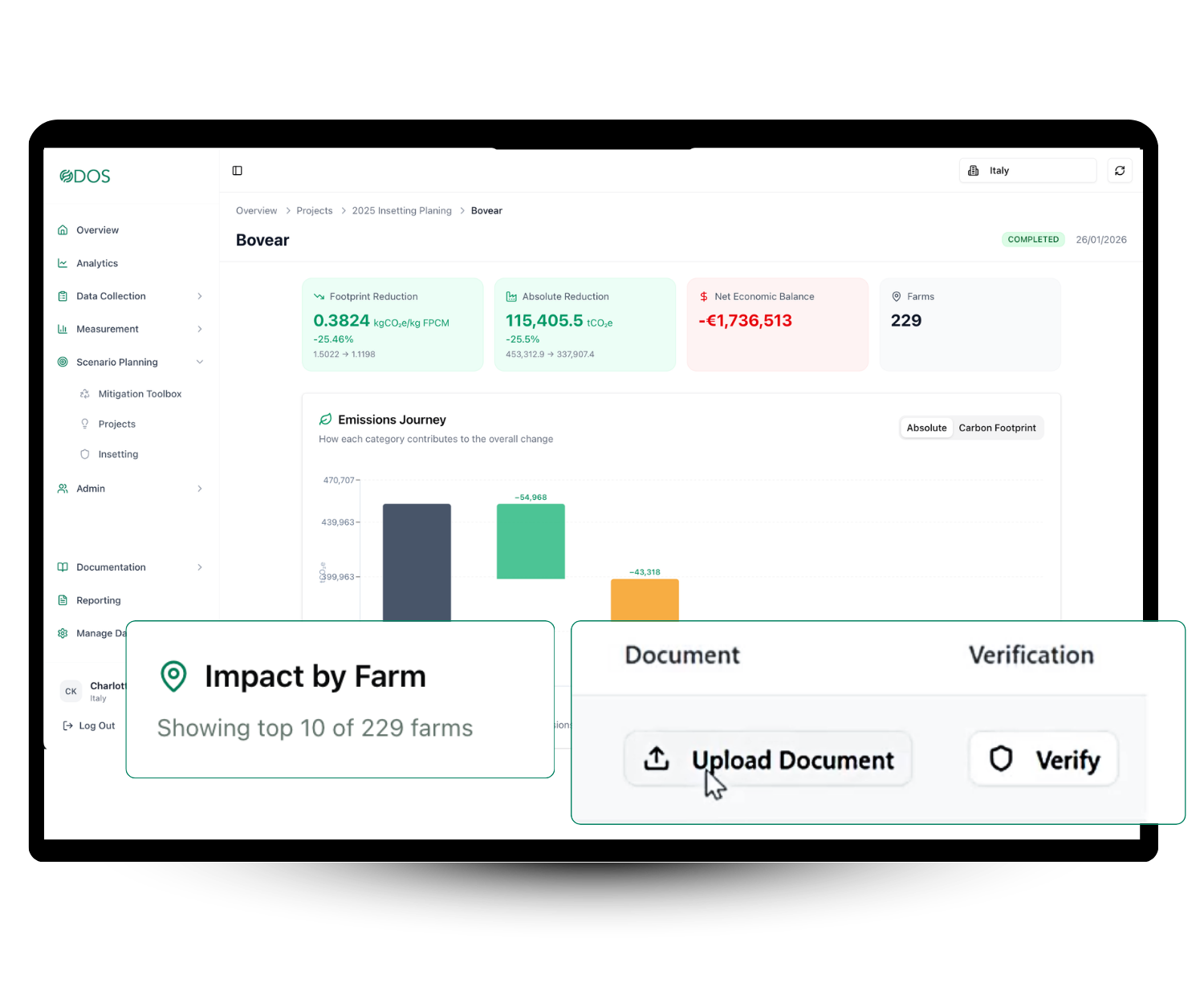
ODOS gives you the layer needed to account for what’s actually happening across your supply base. Tracking inventory changes in your Scope 3 emissions and recording the specific projects and actions behind them, with farmer-uploaded evidence tied to each intervention.
-
Track Scope 3 inventory changes over time
-
Account for projects and interventions individually
-
Farmer-level evidence captured through the platform
See Your 2030 Target Become a Plan
In 30 minutes, we’ll show you a credible net zero pathway, the interventions that move your supply chain’s footprint most, and how every action your farmers take can be accounted for, using your data.
- info@odostech.com
- +34 671 648 478
- Irlanda: Nova UCD, Dublín.
- España: Lanzadera, Valencia.
Lo que dicen de nosotros
Hear from leading cooperatives we've helped measure, manage, and reduce their environmental impact.
"ODOS enabled us to understand exactly what is happening on our farms. With their customized solutions for emissions and biodiversity analysis, they not only found hidden potential but also showed us how to unlock it. Thanks to the strategy developed by ODOS, we are a huge step closer to reaching our sustainability goals.”