
Fertiliser
Protected
Urea
A nitrogen fertiliser treated with inhibitors that cut nitrogen losses to the air, delivering the same nitrogen to the crop as standard urea with a lower emissions footprint.
See the cost breakdown →01 · Context
How It Works
Standard urea loses a share of its nitrogen to the air as ammonia and nitrous oxide before the crop can use it.
That loss happens in two steps. Urea first breaks down into ammonium, a process called ammonification, and the ammonium then converts to nitrate through nitrification. Nitrogen can escape at both points, as ammonia gas during the first step and as nitrous oxide during the second, before the plant ever gets to use it.
Protected urea is coated with inhibitors that slow both of those steps down, giving the plant more time to take up the nitrogen before it is lost.
It is spread using the same equipment and at the same nitrogen rate as conventional urea, so nothing else about the fertilising routine needs to change.
Applied to soil
Coated protected urea granule
Nitrogen loss slowed
Inhibitors block the loss pathways
Reaches the plant
More nitrogen available for growth
02 · Emissions
Impact On Emissions
Protected urea has a substantially lower nitrous oxide emission factor than conventional urea, so switching reduces direct soil emissions in proportion to how much of your nitrogen programme is replaced.
Farms that switch their full urea and CAN nitrogen use to a protected form see the largest effect, and nitrogen use efficiency typically improves alongside the emissions reduction.
Your exact reduction, based on how much of your current programme is urea or CAN and how much you switch, is modelled precisely for your farm in the ODOS Tech platform.
03 · Production
Impact On Production
Published research shows protected urea delivers nitrogen to crops as effectively as, or more effectively than, conventional urea, so no negative effect on yield is expected.
There is no trade off to weigh here. It is a straightforward swap with no yield risk.
Production Snapshot
Based on published research comparing protected and conventional urea
Reported yield loss
across published research comparing the two forms
04 · Costs
Cost & Economics
A modest premium, not a new spend line.
Protected urea typically carries a price premium per tonne of nitrogen compared with standard urea, since the coating adds a manufacturing step. The net cost is that premium multiplied by the amount of nitrogen switched.
There is no new equipment required, since it is spread the same way as conventional urea. For many farms, the premium is modest relative to the emissions benefit, particularly where a processor is asking for documented reductions.
See the impact →- Priced as a premium per tonne of nitrogen, not a new product category
- No equipment to buy, spread with the same kit at the same rate
- Net cost scales only with the nitrogen you switch
- Often modest relative to the emissions benefit it delivers
05 · Fit
Where This Works Best
Strong fit
- Any farm currently applying urea or CAN as its main nitrogen source
- Farms wanting the simplest first step into mitigation
- Processors asking for documented, verifiable nitrogen reductions
Less suited
- Farms already on other fertiliser types, such as NPK blends or calcium nitrate, which this specific switch does not cover
- Farms with very low overall nitrogen use, where the premium outweighs the benefit
06 · Model
How We Model This
Reduction is calculated by replacing a user defined share of conventional urea and CAN nitrogen with the protected urea emission factor, using IPCC aligned figures for the difference in nitrous oxide loss between the two forms.
FAQ
Preguntas frecuentes
Does protected urea affect crop or grass yield? +
No. Published research shows it delivers nitrogen as effectively as conventional urea.
How much does protected urea reduce emissions compared to standard urea? +
The reduction scales with how much of your urea and CAN nitrogen is switched, since protected urea has a substantially lower nitrous oxide emission factor.
Is protected urea more expensive than regular urea? +
Yes, it carries a price premium per tonne of nitrogen, reflecting the extra manufacturing step.
Can protected urea replace all the nitrogen fertiliser on a farm? +
It can replace any urea or CAN nitrogen in the programme. Other fertiliser types are not affected by this specific switch.
Does protected urea require different spreading equipment? +
No, it is spread using the same equipment and rate as conventional urea.
How is the nitrogen switch verified? +
Through your fertiliser purchase and spreading records uploaded to the platform, checked against your baseline nitrogen programme.
More Like This
Related Strategies

Low Emission Fertiliser
A wider swap across the full nitrogen programme, replacing urea, CAN, and more with lower carbon fertiliser products.
See how it works →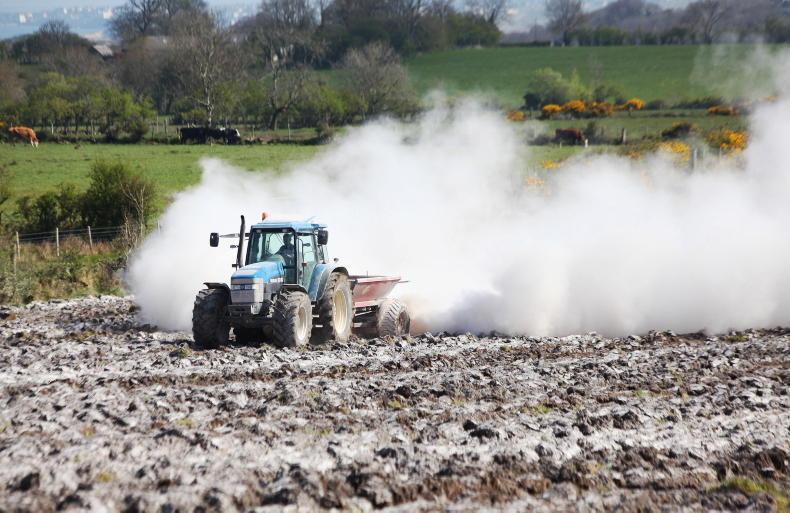
Liming
Raises soil pH so nitrogen is used more efficiently, another simple lever on the fertiliser side.
See how it works →
Multispecies Swards
Diverse swards fix nitrogen naturally, cutting the nitrogen requirement itself rather than the emissions per kilogram applied.
See how it works →