SGS Validates ODOS Tech's Carbon Footprint Model: A Milestone for Dairy Climate Transparency in Spain
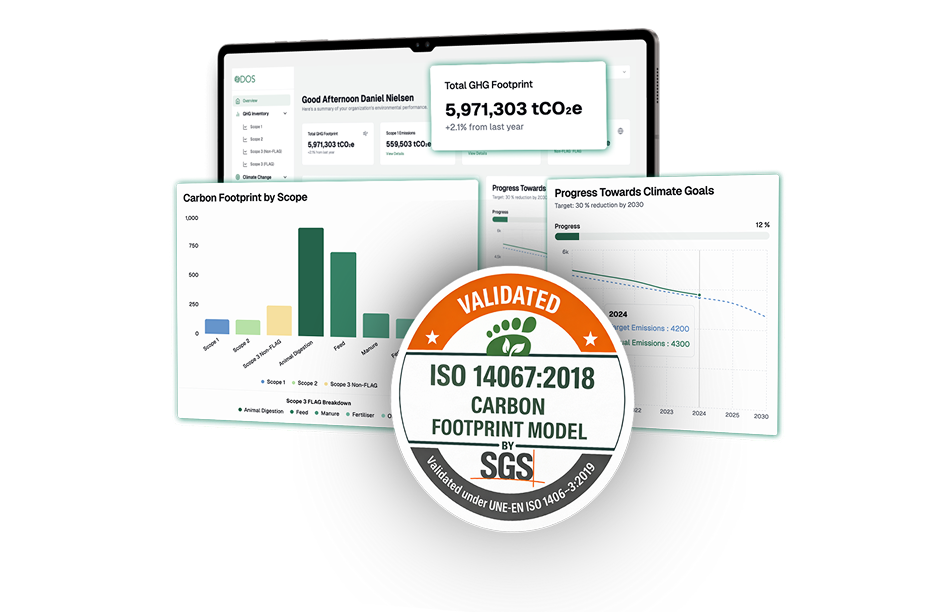
We are proud to announce that our carbon footprint model for dairy farm emissions has been officially validated by SGS, a world leader in inspection, verification, testing, and certification services. This recognition is not just a technical achievement; it marks a new level of trust and credibility in how we help the agri-food sector measure and reduce emissions across the value chain.
Who Is SGS?
SGS (Société Générale de Surveillance) is one of the most respected global certification bodies, known for its rigorous, science-based approach to auditing and validation. SGS evaluates methodologies and claims against international standards to ensure transparency, traceability, and material accuracy.
In this case, SGS validated the ODOS carbon footprint model against the UNE-EN ISO 14064-3:2019 standard and confirmed it meets the criteria of ISO 14067:2018, the global standard for calculating the carbon footprint of products.
This means our model was independently reviewed for its completeness, scientific consistency, and methodological transparency and deemed materially correct.
The term “materially correct” means that the carbon footprint model is sufficiently accurate and free from significant errors or omissions that could mislead users or stakeholders. SGS confirmed that our methodology produces credible, traceable, and auditable GHG results that meet international best practice.
What the Certification Covers
This validation specifically applies to our model for dairy cooperatives operating in Spain. The methodology was designed and validated using Spanish farm data and reflects the agricultural practices, climate, and feed systems typical of Spanish dairy operations. It calculates the full carbon footprint of milk production on-farm, from upstream feed to emissions at the point where milk leaves the farm gate.
The ODOS Model: What’s Included?
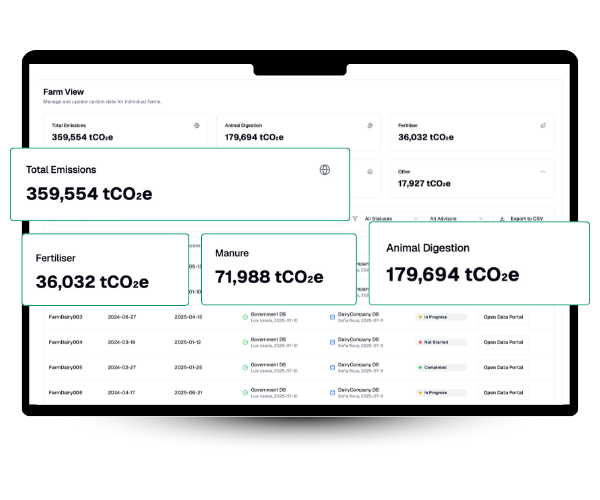
Our cradle-to-farm-gate model covers both Scope 3 FLAG and Scope 3 non-FLAG emissions, making it one of the most comprehensive GHG quantification tools available in the dairy sector:
Enteric methane (cows)
Manure management (CH₄ and N₂O)
Feed production (including land use change and embedded emissions)
Fertilizer application and soil emissions
Energy use (electricity, diesel)
Other farm-level inputs (lime, plastics, etc.)
The methodology follows the Product Category Rules (PCR) for raw milk (UN CPC 0221) and integrates emission factors from world-class sources such as Agri-Footprint, Ecoinvent, IPCC 2019, and Exiobase.
Why It Matters for Dairy Cooperatives and the Food Sector
This validation comes at a critical time. Under the EU’s Corporate Sustainability Reporting Directive (CSRD), food companies and dairy cooperatives must report Scope 3 emissions with credible, verifiable data. For most dairy supply chains, the majority of climate impact originates at the farm level.
With this validation, ODOS Tech now provides a trusted, auditable methodology for:
CSRD-compliant sustainability reporting
Science-Based Targets Initiative (SBTi) FLAG calculations
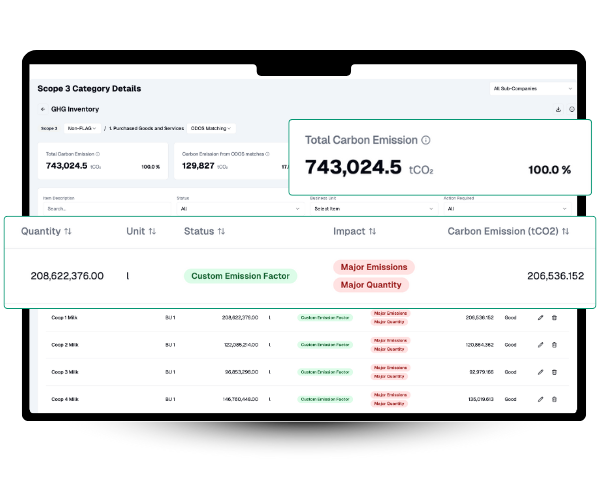
Scope 3 emissions tracking and mitigation for dairy cooperatives, processors, and food brands
Built for Action, Not Just Compliance.
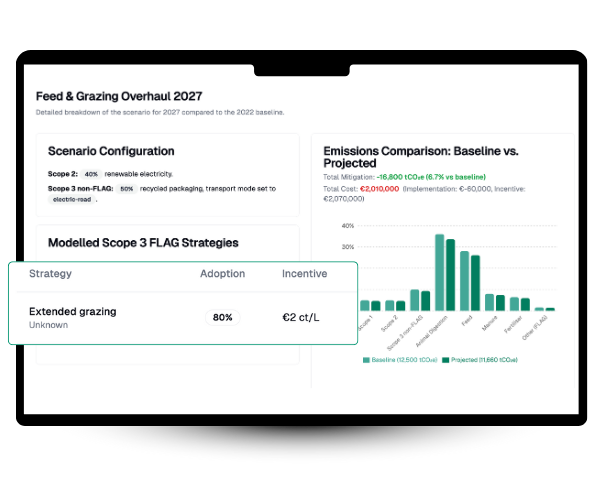
We believe sustainability should be measurable, but also actionable. That’s why the ODOS platform doesn’t stop at carbon footprinting. It helps users benchmark farms, model mitigation scenarios, and monitor progress over time, turning data into impact.
Ready to explore your own climate impact? Our Dairy Carbon Calculator helps you estimate emissions per liter of milk, while our Mitigation Toolbox shows practical strategies to reduce them. Try the tools built for real farms, real data, and real reductions, directly on the ODOS platform.
Our Sustainability Solutions
Collect Data, Analyse Full Impact & Act On Results.